
What is digital eye strain?
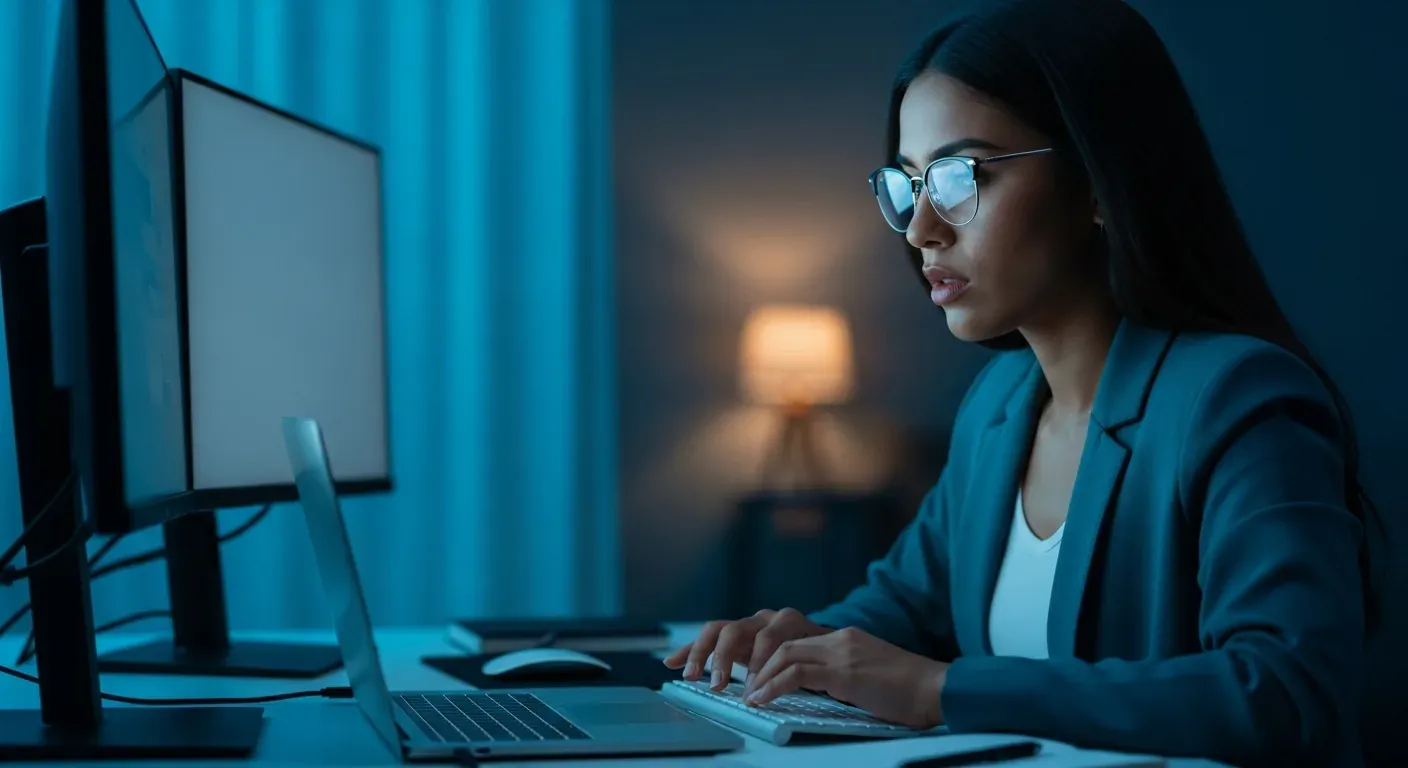
These days we spend a large part of our time in front of screens: smartphones, computers, tablets and televisions. Although we often don't notice it, this habit can seriously affect our visual health.
Digital eye strain has become one of the most common problems in both adults and children. Symptoms can appear after several hours of work, study or entertainment in front of electronic devices. Identifying the signs early and taking preventive measures can help protect your vision and improve your quality of life.
According to the American Academy of Ophthalmology (AAO), digital eye strain is a multifactorial problem: it isn't due to a single cause, but mainly to reduced blinking in front of screens and the reflections that reach the eye.
Why does it happen?
- Prolonged use of computers and smartphones
- Poor ambient lighting
- Incorrect screen distance
- Not taking visual breaks
- Excessive screen brightness
- Continuous use of lenses with an incorrect prescription
- Dry eyes
Most common symptoms
Dry or irritated eyes
In front of a screen we blink up to 60% less, which dries out the ocular surface.
Intermittent blurry vision
Sustained focus tires the accommodation muscle and blurs text by the end of the day.
Glare and light sensitivity
Screen reflections and ambient lighting increase glare reaching the eye.
Headaches and disrupted sleep
Visual strain and screen light at night affect rest and circadian rhythms.
Protective lenses and blue light filters: what the evidence says
Beyond commercial myths, it's worth looking at the science. Systematic reviews indexed in PubMed/PMC (in line with what publications such as the Cochrane Database of Systematic Reviews assess) help separate what works from what doesn't.
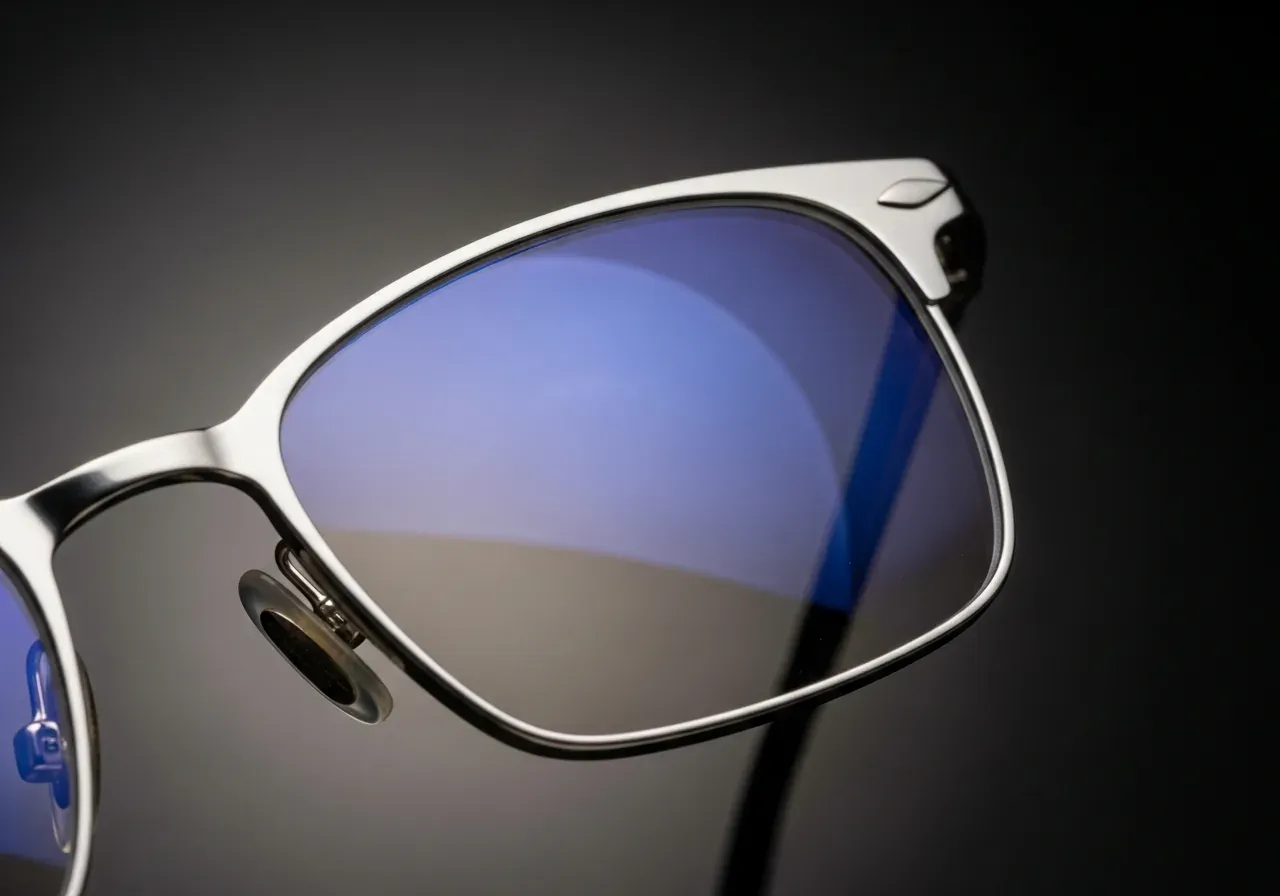
Technology that filters high-energy light, not the colors
They selectively filter blue-violet light
These filters act on the most energetic range of the visible spectrum without altering color perception, so you'll see your screens normally.
The anti-reflective coating cuts reflections and glare
An advanced anti-reflective treatment reduces screen reflections and glare, one of the factors the AAO does link to digital eye strain.
Support for nighttime use
Cutting screen blue light at night may help your rest; the best habit is still to limit device use before sleep.
In short: protective lenses with a blue light filter are not a magic cure, but they are a supported tool when integrated with a correct prescription, a good anti-reflective coating and healthy habits. If you care about comprehensive eye care, our article on UV protection in Cuenca can also help.
Every 20 minutes in front of a screen, look at something 20 feet (about 6 meters) away for 20 seconds.
This is the 20-20-20 rule, a widely endorsed clinical recommendation to relax the accommodation muscle and restore the natural blinking rhythm.
A simple, free habit backed by the evidence.
How to prevent digital eye strain
- Apply the 20-20-20 rule whenever you work in front of screens
- Adjust ambient lighting to avoid reflections
- Maintain an appropriate screen distance (approx. 50–70 cm)
- Blink frequently and consciously
- Schedule regular eye exams with an optometrist
Millimeter-precise personalization with OptiStudio technology
At SOI Ópticas we don't believe in generic solutions. Thanks to the cutting-edge technology of OptiStudio, our own in-house optical lab, we can craft and personalize virtually any type of lens, adapted millimeter by millimeter to your visual profile and your level of fatigue.
Single-vision protective lenses
For those who spend hours at the computer at a single working distance. They reduce accommodative fatigue without changing your usual prescription.
Personalized progressives
Sharp distance, intermediate (the screen) and near vision in a single lens, calculated millimeter by millimeter for your profile.
Advanced anti-reflective + blue-violet filter
A treatment that selectively filters high-energy blue-violet light, removes reflections and improves contrast without altering color perception.
This personalization is the difference between a "standard" lens and one made for your eyes: your exact prescription, your working distance, the right anti-reflective treatment and the blue-violet light filter in just the right measure. Looking for lenses that darken in the sun or polarized options? Discover our Transitions lenses in Cuenca and our polarized sunglasses in Cuenca.
Designed for the Cuenca lifestyle
Today work, study and leisure all happen on a screen. If your day runs between devices, digital eye strain is probably already part of your routine.
Long days in front of the computer
Office work, meetings and reports for hours on end. Well-calibrated protective lenses make the difference by the end of the day.
Study and on-screen classes
Online classes, digital reading and late-night work. Protecting your sight today is an investment in your performance and rest.
Remote work and digital life
More and more people work and connect from home. A blue light filter and a good anti-reflective coating care for your eyes in every video call.
An eye exam is the starting point
The right solution starts by measuring your real vision. Book your evaluation and we'll design the ideal lens for your lifestyle.
When should you see an optometrist?
Book an eye evaluation if you experience any of these signs:
- Frequent headaches at the end of the day in front of screens
- Blurry vision that appears consistently, not just at the end of the day
- Visual discomfort that persists even after resting
A timely evaluation rules out undetected prescription issues and allows us to design the exact solution for your lifestyle.
Where to get blue light filter lenses in Cuenca
Book your eye exam at either of our two stores. We craft your blue-violet light filter lenses with advanced anti-reflective coating at OptiStudio, our own optical lab.
SOI Ópticas — Local Centro
Benigno Malo 7-19 y Pdte. Córdova · Cuenca
Mon – Fri 10:00–18:15 · Sat 9:00–13:00
Cuenca's historic center: general eye care and contact lens fitting.
SOI Ópticas — Local Estadio
Florencia Astudillo 3-45 y Av. Solano · Cuenca
Mon – Fri 10:00–19:00 · Sat 9:00–13:00
Home of the OptiStudio lab and the ophthalmology practice.
Frequently asked questions
Protective lenses are eyeglass lenses designed to reduce the eye strain caused by prolonged screen use. They combine the right prescription (if you need one) with an advanced anti-reflective coating that removes reflections and glare, and optionally a blue-violet light filter. They are the recommended solution if you use a computer, phone or tablet more than 4 hours a day.
Protective lenses add treatment layers designed for the digital environment: a high-quality advanced anti-reflective coating and, in some cases, a selective blue-violet light filter. A regular lens without an anti-reflective coating lets screen reflections reach the eye directly, which increases fatigue.
They help as part of a comprehensive solution. The American Academy of Ophthalmology explains that digital eye strain is multifactorial: it depends mainly on reduced blinking, glare and sustained focusing effort. What helps most is the correct prescription, a good anti-reflective coating and habits like the 20-20-20 rule. The blue-violet filter is an optional complement.
It's rarely serious, but it can significantly affect your performance, concentration and daily wellbeing. If symptoms persist even after resting, it's time to see a professional.
There is no scientific evidence of permanent direct eye damage from screen use. However, prolonged exposure causes significant visual discomfort that, without attention, can become chronic.
Yes. If your vision is good, you can wear protective lenses without a prescription: just the advanced anti-reflective coating and, if you want, a blue light filter. If you have myopia, astigmatism or presbyopia, we build the protection into your prescription in customized single-vision or progressive lenses.
No. Selective blue-violet filters act on the most energetic range of the spectrum without altering color perception.
Blue light from screens at night can affect circadian rhythms and sleep quality. The most effective step is to cut down on screen use before bed; as support, a protective lens with a selective filter reduces part of that exposure.
Yes, and it's increasingly common. Prolonged use of tablets, computers and phones affects children too — who are also in a critical stage of visual development. Limiting screen time and scheduling regular eye exams is strongly recommended.
At SOI Ópticas, an optician in Cuenca with more than six decades of experience. After your eye exam, we craft protective lenses with an advanced anti-reflective coating and a blue-violet light filter at OptiStudio, our own optical lab.
Sources and references
- American Academy of Ophthalmology (AAO). Computers, Digital Devices and Eye Strain. aao.org
- American Academy of Ophthalmology (AAO). Should You Be Worried About Blue Light? aao.org
- Singh S, Keller PR, Busija L, et al. Blue-light filtering spectacle lenses for visual performance, sleep, and macular health in adults. Cochrane Database of Systematic Reviews, 2023. cochranelibrary.com · PubMed