

The Geographic "Triple Threat"
Cuenca combines three unique factors that push UV risk to extreme levels. Understanding why it happens is the first step to protecting yourself wisely — with a complete eye exam and UV transmittance test and the right lenses (see our 2026 guide to Transitions® and Xperio® lenses).
"A 41-year-old patient came in with a pterygium covering 20% of his right cornea. He had been wearing dark sunglasses bought at the market for 12 years. He believed he was fully protected. The transmittance test showed 0% UV400 filter. His only reaction: 'No one ever told me that dark color doesn't mean protection.'"
— Real clinical case · SOI Ópticas, Cuenca 2025 · Anonymized data
Extreme Altitude
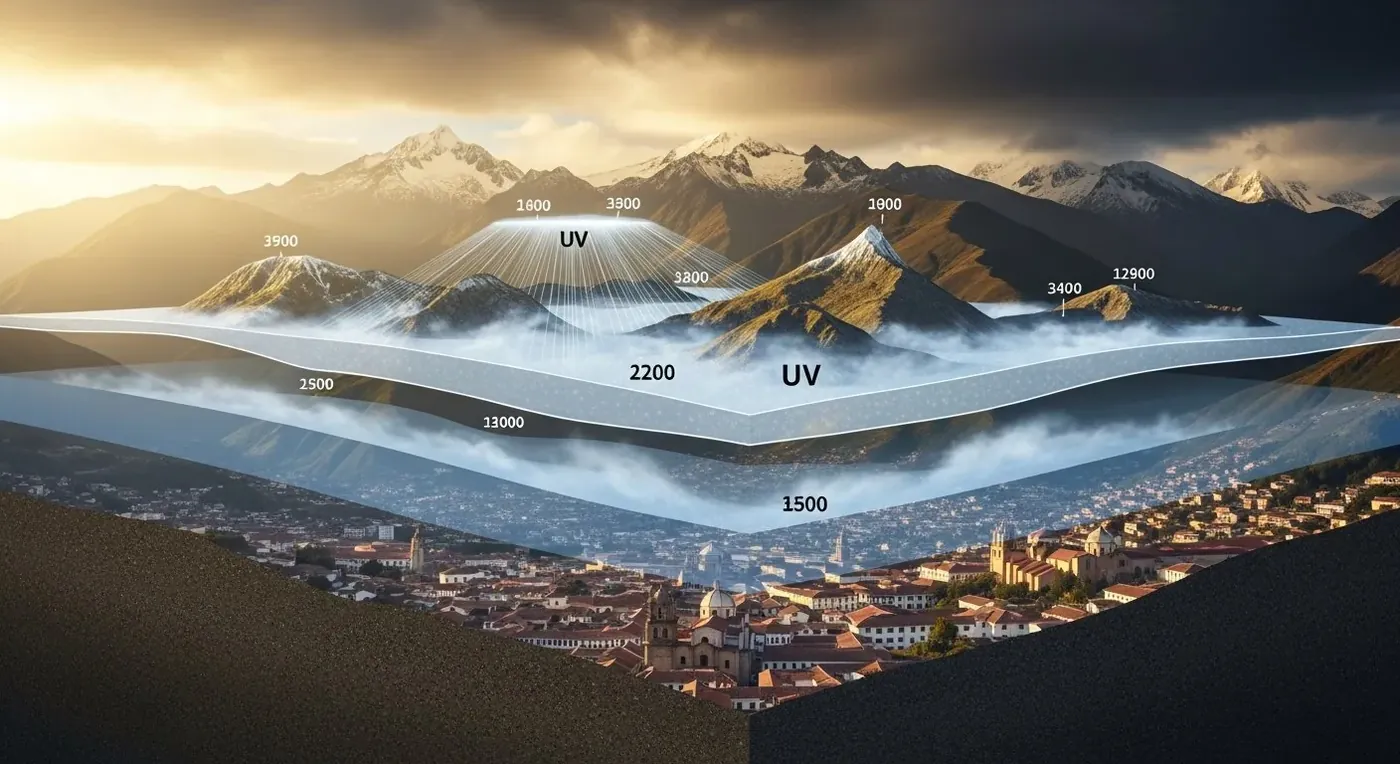
At 2,550 m the thin atmosphere filters less. We receive 30% more radiation than at the coast.
Torrid Zone
Our latitude means a naturally thinner ozone layer than at the poles.
Perpendicular Incidence
Rays hit at almost 90° (especially during the equinoxes), arriving with their full intensity intact.
The same rays that warm your face in winter silently damage your eyes.
Temperature is not an indicator of UV radiation. Altitude is.
Relative UV Radiation Index by Altitude
Coast = 100% baseline reference
Scientific estimates: ~10–12% increase per 1,000 m of altitude.
How does UV and sunlight affect your eyes? A silent damage
Ocular tissues are far more sensitive to radiation than we usually imagine. Here you'll find some of the most common types of damage in each layer — a representative, not exhaustive, selection so you have a clear idea of what's at stake.
Eyelids and Periocular Area
The skin around your eyes is the thinnest and most fragile in the human body — up to 10 times thinner than other areas. It is the first line of defense and the most exposed.
Premature photoaging
Appearance of "crow's feet" and dark spots before age 40 due to accelerated collagen breakdown.
Already noticing fine lines around your eyes before 40? It may be cumulative UV damage.
Eyelid cancer (Periocular carcinoma)
Common in high-radiation areas. It often starts as a small sore on the eyelid edge that does not heal within 2 weeks.
A persistent small scab or ulcer on the eyelid should be evaluated without delay.
Irritation and Abnormal Growths
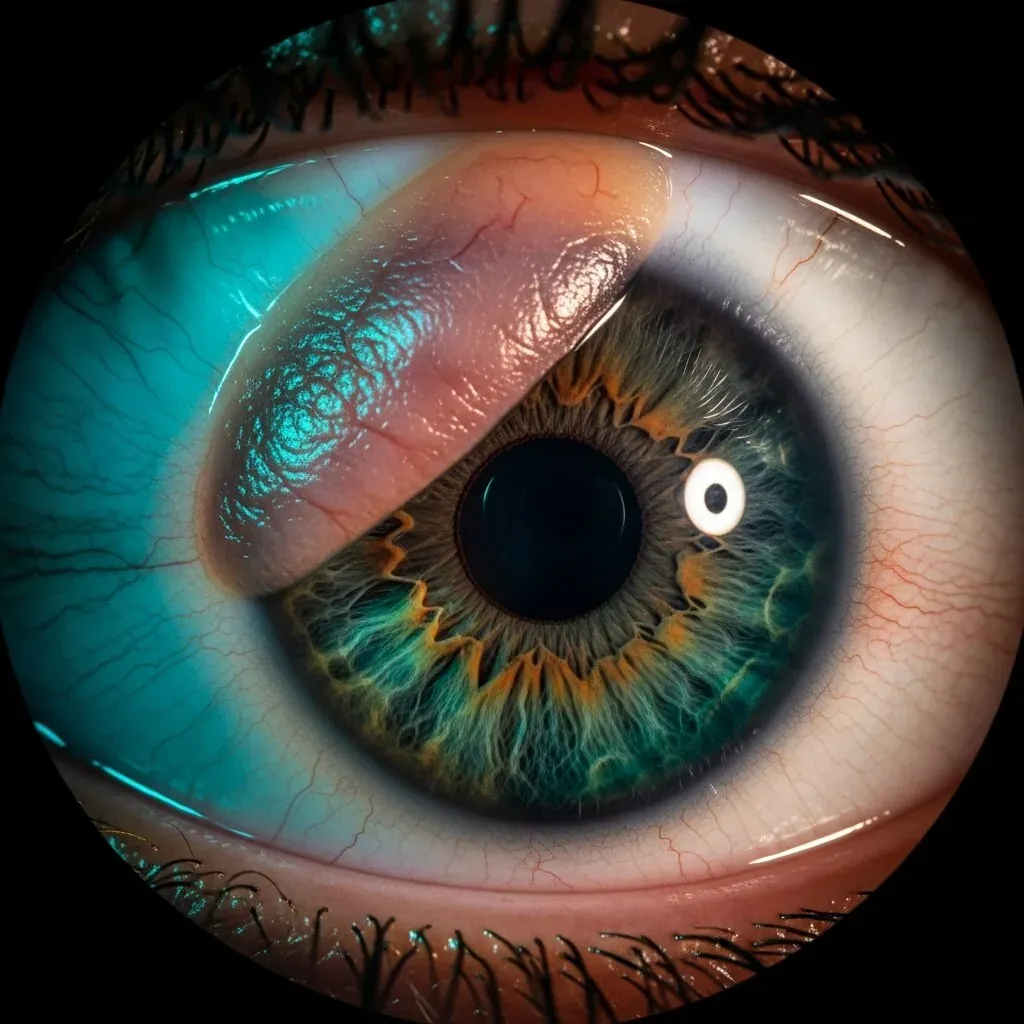
The outer layer of the eyeball directly absorbs UV rays. The resulting inflammatory response can lead to growths that, if untreated, compromise vision.
Pterygium — 'Surfer's eye'
Very common in the Andes. It is the growth of a pinkish membrane from the corner of the eye toward the cornea. In advanced stages it distorts vision and requires surgery.
Notice a pink 'fleshy patch' in the inner corner of your eye? That's its earliest sign.
Photokeratitis — 'Sunburn of the eye'
Like a sunburn, but on the cornea. It produces intense pain, watering and a gritty sensation that appears hours after exposure.
Very red, burning eyes at the end of a sunny day with no obvious cause may be photokeratitis.
Irreversible Structural Damage
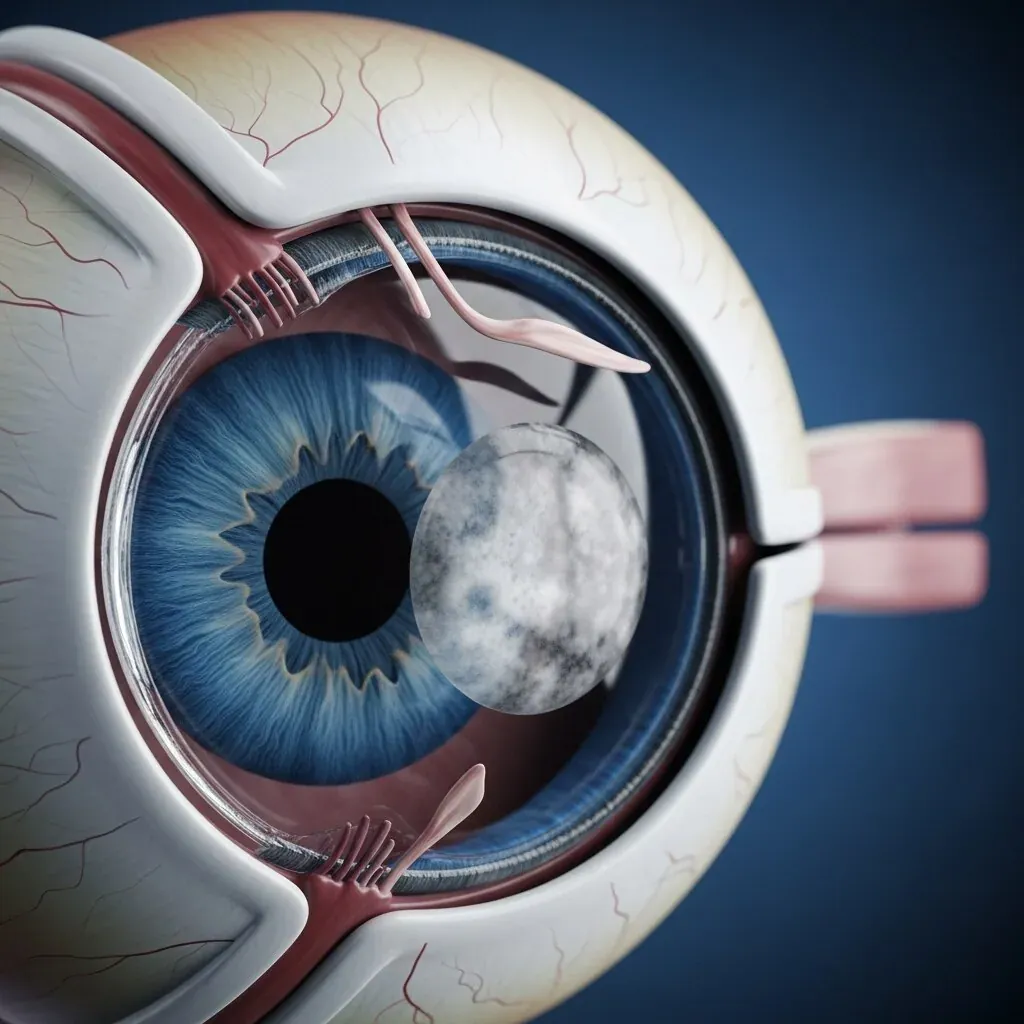
Radiation that penetrates the outer layers builds up in the inner structures of the eye over years. By the time symptoms are obvious, the damage is usually permanent.
Early cataracts (clouded lens)
UV accelerates the breakdown of proteins in the crystalline lens — the eye's natural lens. It can appear in people aged 40–50 instead of in their 70s.
Do you see as if through a foggy window even with good lighting? Get checked soon.
Macular degeneration (loss of central vision)
Cumulative damage to the macula, the area responsible for reading and recognizing faces. It is the leading cause of blindness in people over 60 in Ecuador.
A fixed dark or blurry spot in the center of your visual field is a critical warning sign.
Myths vs. Facts
Misinformation is a bigger risk than the sun itself. This is the technical truth behind the most common popular beliefs in Cuenca.
Myth
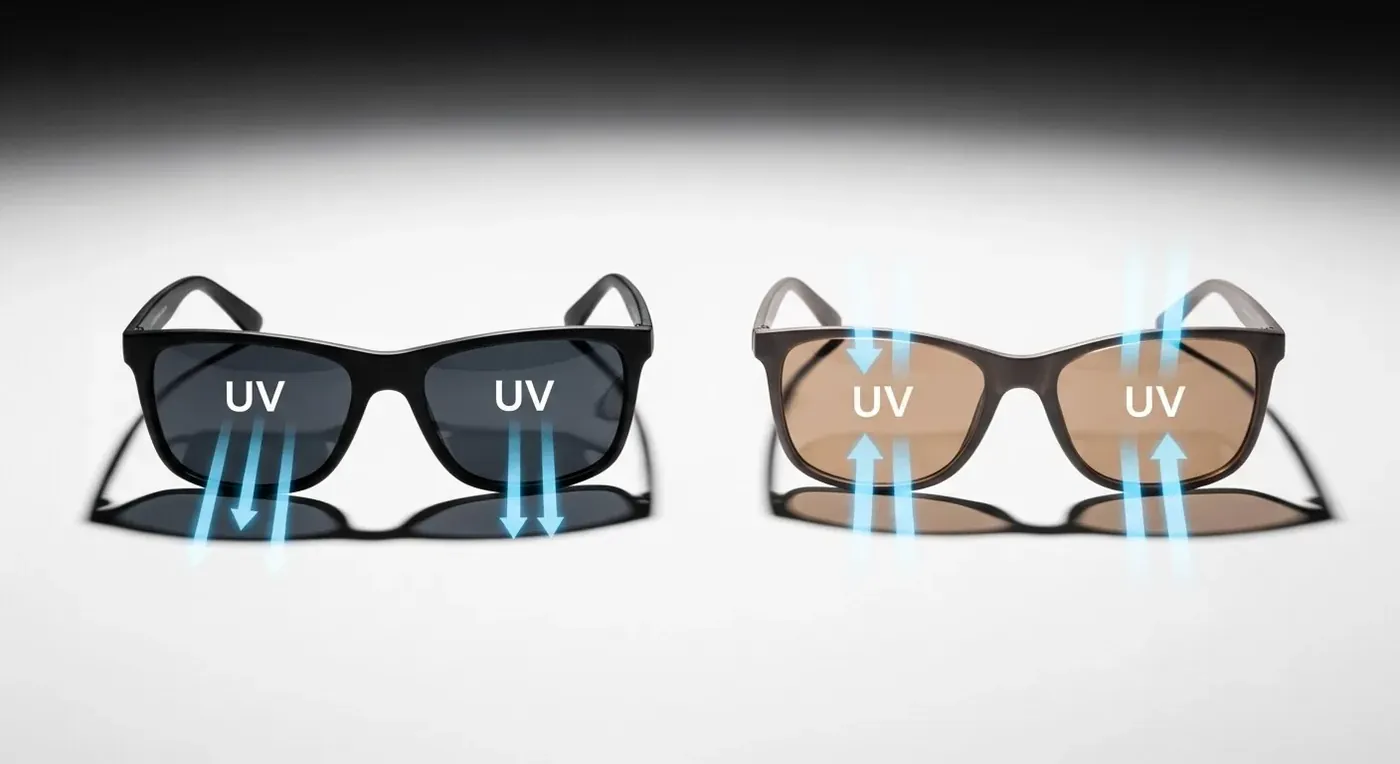
"If the lens is darker, it protects more."
Truth
Color is just a cosmetic tint. Protection depends exclusively on the UV400 filter. A dark lens with no filter dilates the pupil and lets in more radiation — it is very dangerous.

Myth
"On cloudy days I don't need sunglasses."
Truth
Clouds in Cuenca let through up to 80% of UV radiation. It's the famous "rainy-day sun": constant, invisible damage.
Myth
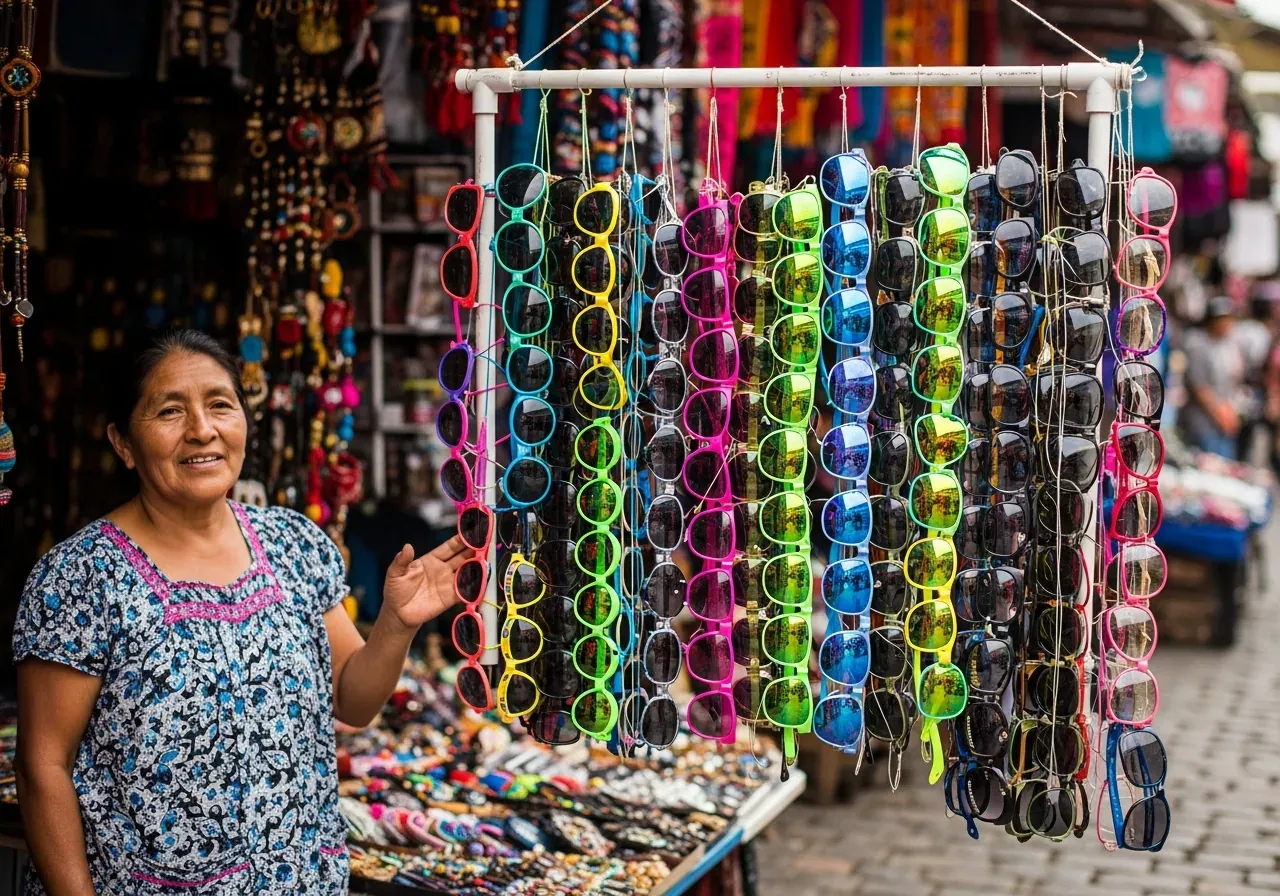
"Street-vendor sunglasses are good enough."
Truth
They lack certified, quality filters. They typically cause visual aberrations, headaches and severe eye strain.

Myth
"I only need sunglasses at the beach or when it's hot."
Truth
In Cuenca the UV index is high even at 15°C (59°F). Radiation depends on altitude and time of day, not on temperature. Cold days can hit UV 10+.

Myth
"Children don't need sun protection for their eyes."
Truth
Children receive up to 80% of their lifetime UV exposure before age 18. The child's lens is more transparent and filters less radiation than an adult's.
Myth
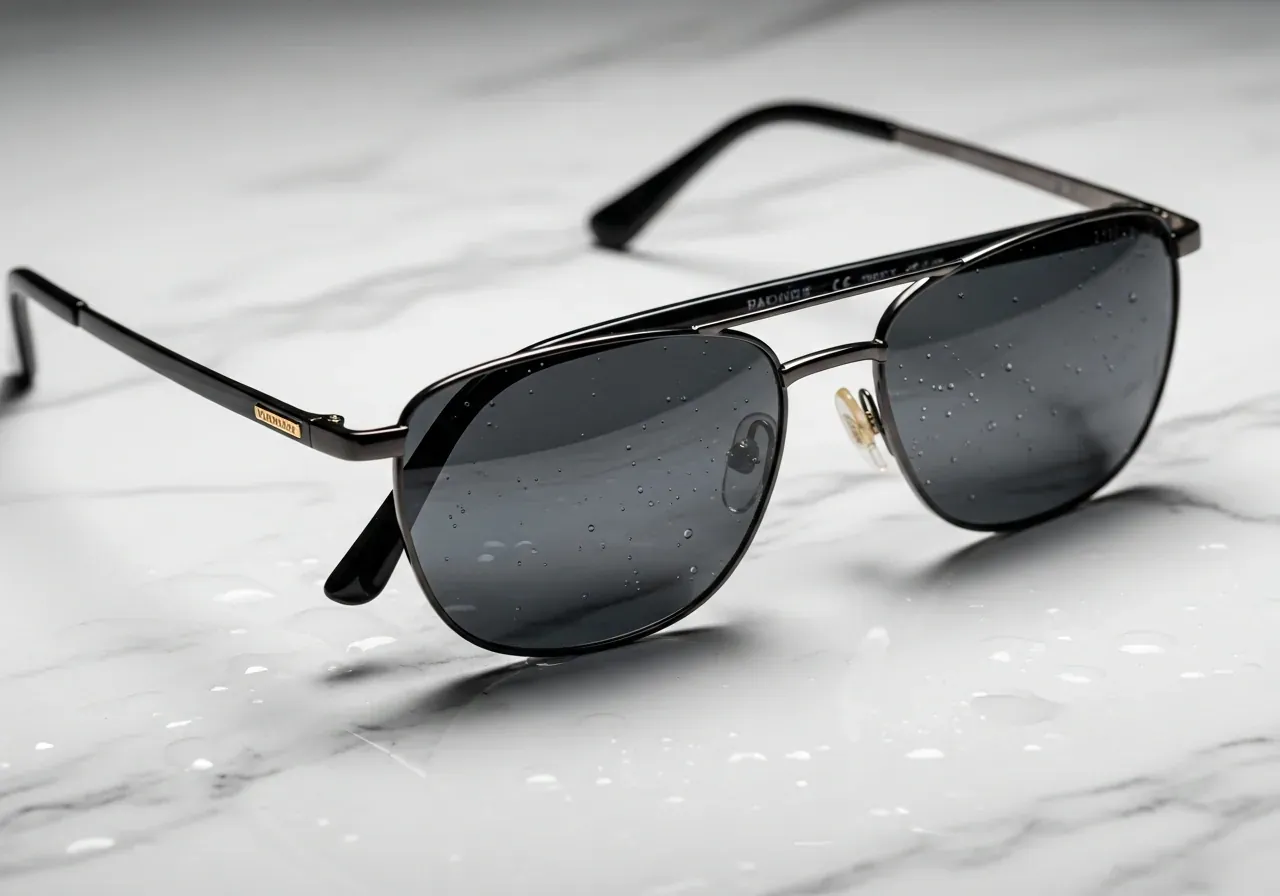
"My designer sunglasses already include UV protection."
Truth
Brand guarantees nothing. A designer lens without UV400 certification is as dangerous as a market-stall pair. Always demand the certificate or ask for the transmittance test.
The SOI Standard
Protection without compromise.
Your next health move.
At SOI ÓPTICAS we understand that visual health is a vital priority in Cuenca, not a luxury. Don't trust only what you see; trust the science behind your protection.
Built-in UV400
Included in every lens we sell, even our most affordable.
Personalized Eye Consultation
One-on-one care tailored to your history and needs.
Photochromic Technology
Dynamic adaptation to Cuenca's light.
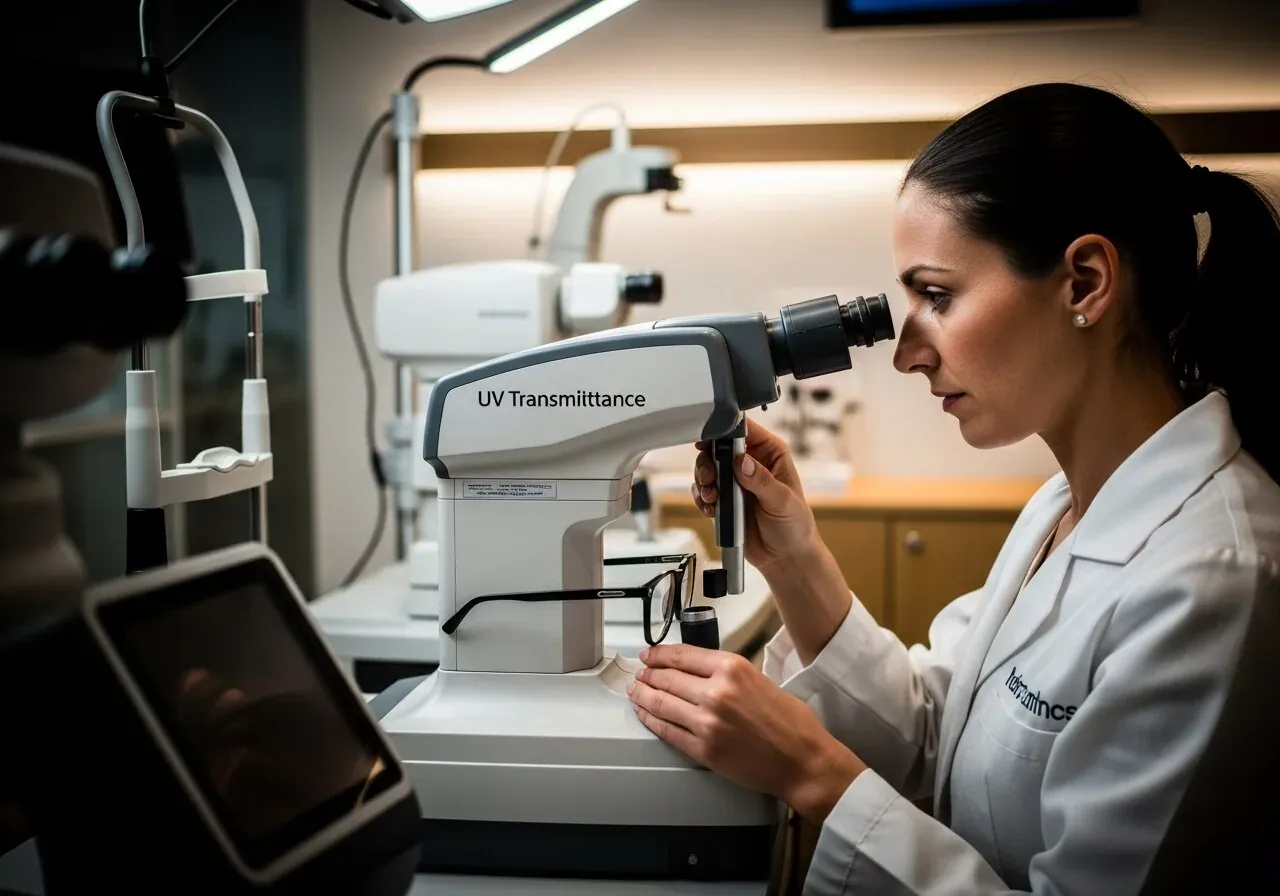
Free UV Transmittance Test
Bring your current sunglasses to our OptiStudio (lab). We'll instantly check with digital sensors whether they're really protecting you from radiation.
Let's protect together the way you see the world!
Where to get UV-protection eyewear in Cuenca
Stop by either of our two stores for a free UV transmittance test and guidance on UV400-certified eyewear and Xperio® polarized lenses, crafted at OptiStudio, our own optical lab.
SOI Ópticas — Local Centro
Benigno Malo 7-19 y Pdte. Córdova · Cuenca
Mon – Fri 10:00–18:15 · Sat 9:00–13:00
Cuenca's historic center: general care and contact lens fitting.
SOI Ópticas — Local Estadio
Florencia Astudillo 3-45 y Av. Solano · Cuenca
Mon – Fri 10:00–19:00 · Sat 9:00–13:00
Home of the OptiStudio lab and the ophthalmology practice.
Frequently asked questions: UV light, sunlight and your eyes
Yes — UV light affects the eyes significantly and cumulatively. Ultraviolet light damages multiple ocular structures: cornea, lens, retina and eyelids. Prolonged unprotected exposure increases the risk of cataracts, pterygium, macular degeneration and keratoconus. Sunlight affects the eyes even on cloudy days, since up to 80% of UV radiation passes through clouds.
Yes. Cuenca sits at 2,550 m above sea level and receives UV radiation year-round thanks to its equatorial position. The UV index can exceed 11 ("extreme" category) even on cloudy days, making it one of the cities with the highest UV exposure in the world. This significantly raises the risk of cataracts, pterygium, keratoconus and other irreversible eye damage.
Three combined factors: altitude (2,550 m filters less atmosphere than sea level), the geographic location almost on the equator (the sun hits more perpendicular and concentrated), and the "eternal spring" climate that means many hours of direct sunlight per year. IERSE (Universidad del Azuay) and INAMHI routinely record extreme UV indices in Cuenca.
Cumulative unprotected exposure in Cuenca accelerates the appearance of cataracts (clouding of the lens), pterygium (a growth over the cornea that can affect vision), macular degeneration and keratoconus. These conditions are progressive and irreversible. In addition, eyelid skin — the thinnest in the body — is especially vulnerable to periocular carcinoma.
Use UV400-certified sunglasses: they block 100% of UVA and UVB radiation. The dark color of the lens does not guarantee protection; always ask for the certificate. Check the daily UV index at inamhi.gob.ec or your phone's weather app before going out. With an index of 6 or higher, eye protection is already recommended. At SOI Ópticas you can take a free transmittance test to verify whether your current sunglasses really protect you.
UV400 is an international standard certifying that a lens blocks 100% of ultraviolet radiation (UVA and UVB) up to 400 nanometers. In Cuenca, where the UV index is among the highest in the world, it is the only real protection against cumulative sun damage. At SOI Ópticas every pair of sunglasses carries this certification.
At SOI Ópticas Cuenca you can buy UV400-certified sunglasses (blocking 100% of UVA and UVB). We have two locations: Local Centro (Benigno Malo 7-19 and Presidente Córdova) and Local Estadio (Florencia Astudillo 3-45 and Av Solano). At Local Estadio we also offer a free UV transmittance test with digital sensors in our OptiStudio lab.